Category Archives: International Politics

The New Cold War


Cold War

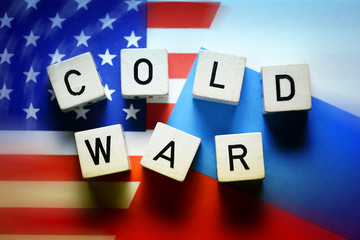
Recent international activities are beginning to remind me of the cold war, and its heating up. Over the weekend the US shot down a Syrian SU-22 ground attack aircraft, after it had attack US supported Syrian and Kurdish forces who were in combat with ISIS. This action in and of itself is significant and indicates a sea change in US policy. But it is not an isolated incident and is a continuing march toward a new cold war that has been in development since the fall of the Soviet Union.

For those who do not remember, the cold war lasted from the end of the second world war in 1945 until the fall of the Soviet Union on 1991. During this time, there were both political and military confrontations between the West and the East. To correct the wrong impression while the term is “Cold War” there were some very hot spots during this time. From the Korean War through Vietnam and smaller conflicts in Africa and South and Central America, the west faced off against the agents of the Soviet Union in many ways. The main difference is that while the West (US) would engage directly with military force the East (Soviet Union) used proxy fighters.

Today we are seeing a rise in tension and a return to many of the same patterns we saw in the past. Both Russia and China have begun to once again challenge our military by close encounters at sea and in the air and by testing our ability to detect and react to air and submarine incursions.  The subs have mostly been in Scandinavian seas, we have not heard of others. Like the last time however this could lead to unforeseen problems. From the proxy side, we see Russia fermenting a civil war in Ukraine and a direct annexation of Chimera. They have also returned to the Middle East by propping up the regime of Assad in Syrian and this time they have committed their own forces.  China is challenging us in the south china sea by the expansion of territorial claims and an increase in military presence.

It may be assumed we won the last time and we will win this time. This time however there is a major change. The United States is seen by many as a paper tiger. Regardless of what we have done in Iraq and Afghanistan it is greatly assumed we will not commit to a major defense of the west. Some of this can be laid at the feet of the current administration for its talk about NATO and the need for Europe to be more proactive in its own defense. But for the most part, on a macro level, we have over the past few years reduced our own military and shown a reluctance to engage in any meaningful way with the growing threat from Russia or China.

During the last cold war, we stayed out of direct confrontation with Russia through something called Mutual Assured Destruction, (MAD).  The concept of MAD was that in the event of a major war both sides had the capability to destroy the other. In a true sense, it was not the fear of mutual destruction that held back the missiles it was the fact that retaliation was assured. Neither side doubted the other would retaliate. In diplomacy, much the same concept is valid. Why would one side bother to negotiate with another if there is no fear of a military response that could be devastating.

Why has Russia run roughshod over the west, in the last few years presidents from both parties did little to react to Russian military adventures other than wag a finger and level ineffective sanctions. The danger today with the sea change I discussed is that it may take a lot more convincing to reign in Russia and China. This will mean there will be violence and death. Should this however work, as history has taught, then if we are still in time it will be less violent that if nothing is done. If we are not in time then nothing will reduce the carnage.

I hope I am right and we are in time. We must however present a more united front to the world then the fighting and inexcusable rhetoric that is coming out of Washington. It is a dangerous time and it will take a strong front to deflect the carnage and save civilization. PLEASE THINK before you get all bent out of shape over some mundane action of a politician, your child could have been Otto Warnbier. I am not sure if we had a better reputation for protecting our citizens there would have been a different outcome, or if he would have been arrested at all. But we need to try. We need to be that country that other would rather talk to then fight.


Groupthink and its Destruction of America


free-speech

Groupthink occurs when a group values harmony and coherence over accurate analysis and critical evaluation. It causes individual members of the group to unquestioningly follow the word of the leader and it strongly discourages any disagreement with the consensus

Psychology Today”


The problem with today’s politics, academics and general discourse is the invasion of groupthink into almost everything. Some of it intentional, such as the Russian probe of the last election and others that just take off and take over any attempt at facts to dispute it.  

Groupthink, a term coined by social psychologist Irving Janis (1972), occurs when a group makes faulty decisions because group pressures lead to a deterioration of “mental efficiency, reality testing, and moral judgment” (p. 9).  Groups affected by groupthink ignore alternatives and tend to take irrational actions that dehumanize other groups.  A group is especially vulnerable to groupthink when its members are similar in background, when the group is insulated from outside opinions, and when there are no clear rules for decision making”

On the Russian probe, we recently discovered that the collusion accusation came from the Clinton campaign shortly after they lost the election. In their book “Shattered: Inside Hillary Clinton’s Doomed Campaign” the authors reveal how the blame was to be discussed.

“That strategy had been set within twenty-four hours of her concession speech. Mook and Podesta assembled her communications team at the Brooklyn headquarters to engineer the case that the election wasn’t entirely on the up-and-up. For a couple of hours, with Shake Shack containers littering the room, they went over the script they would pitch to the press and the public. Already, Russian hacking was the centerpiece of the argument.”

In this aspect of groupthink, a political talking point has been spread by the Democratic party elites and pounded into the head of anyone who will listen, until it is accepted as unalterable fact, even though to date there has been no proof. In the beginning, it is just a talking point for the party faithful to carry forward, but soon evolves into groupthink by its acceptance and adaption by the press and then social media. For many it is so accepted that regardless of what any investigation determines or what facts are brought forward, it was the Russians that caused HRC to lose the election and Trump and his people colluded in the effort.

This is a very dangerous position for any people to find themselves. In the past, it has been confined to small groups and was still dangerous. The operational commanders of the US armed forces in the late 1930’s and 40’s knew of the dangers of Japanize aggression but had determined they were incapable of a major attack on US positions, then came Pearl Harbor.


Currently groupthink has been used to argue other political points. The repeal of the Affordable Care Act (Obamacare) and its replacement the American Health Care Act (Trumpcare) are being declared the death of millions of Americans who will be thrown out into the street and made to live without any health insurance. As the bill is still being worked out and major elements of Obamacare will remain, this is obviously blind panic. Today the President will declare the US will withdrew from the Paris Accords on the environment. Again, millions if not billions of people will die and American leadership will wain and we will become a pariah in the world. Currently the US has made great strides in environmental protection, well beyond that of most of the world. We have replaced coal with natural gas at great savings both economically and environmentally. While I feel for the coal industry it is unlikely that the end of the Paris Accords will bring back coal in any major way. It is just not economical.

Groupthink however has now made anything associated with President Trumps administration instantly odious to all of humanity. There is nothing to see here, move on, we have decided and if you do not agree you are a fascist, homophobe, racist, deplorable. In fact I agree with a lot that Trump is doing as well as disagree with a lot of other things he does. This is because I refuse to give into the easy road of groupthink. I will leave you with some words of wisdom, not mine.

We cannot solve our problems with the same thinking we used when we created them.

Albert Einstein

“If everyone is thinking alike, then somebody isn’t thinking”

George S. Patton

So, everyone PLEASE THINK.

Back Channels and Back to the Bad Old Days


snapshot20100126085154.6272

The recent reporting on Jared Kushner and the alleged attempt to set up a back channel to the Russians is reading less like news and more an attempt to develop a plotline for an Ian Fleming novel. To put things in perspective we must first define back channel communications. We have two definitions first from the online Business Dictionary:

            “’Grapevine’ or informal communication that travels parallel to (and sometimes ahead of) official channels in an organization or society.”

Next from Dictionary.com:

 “noun 1.a secret, unofficial, or informal channel of communication as used in politics or diplomacy: sensitive information passed on through a back channel.” 

The term “Back Channel” was coined in the 1950’s, during the cold war, by government and foreign policy officials and intelligence operatives to refer to alternative methods for communicating across borders by using lines of communication not available to traditional official governmental and diplomatic entities or to covert international intelligence agents.

This last come from a Wikipedia Synopsis of the film “Back Door Channel: The Price of Peace.” A film documenting the process that made the 1979 Israeli/Egypt peace treaty posable. To put a point to all of this, back channels are not unheard of or unusual in either business or government.

So why all the hubbub, because its Trump, and the Russians are involved. Why are the Russians such bogymen in all things Trump, well, let us see! Toward the end of the book “Shattered,” by journalists Jonathan Allen and Amie Parnes, there is a passage that is not getting a lot of press:

 “Within 24 hours of her concession speech,” the authors report, campaign manager Robby Mook and campaign chair John Podesta “assembled her communications team at the Brooklyn headquarters to engineer the case that the election wasn’t entirely on the up-and-up. For a couple of hours, with Shake Shack containers littering the room, they went over the script they would pitch to the press and the public. Already, Russian hacking was the centerpiece of the argument.” -Published on Monday, May 01, 2017 by Common Dreams “How the Russia Spin Got So Much Torque”  by Norman Solomon-

It was the Russians who had engineered the defeat, and the new talking points and all arguments from this point forward would paint a Trump/Russia connection, and facts be damned. It is understandable that democratic politicians took up the call, after all the orders came from on high, but the mainstream media as well reported all as fact without checking sources. Now we have sources that are plentiful, many not even able to know what they are reporting on. By this last I mean the “former government officials” that report the happenings of private meetings. But worst are the leakers, revealing reports that should never leave the confines of the government. This brings us back to Kushner.

The report apparently came from an intelligence intercept of a diplomatic message sent by the Russian Ambassador to Moscow describing the meeting. This means one of two things, we just told the Russians we have broken their diplomatic code, or the message was sent in the clear. From what I can gather it was sent in the clear. Which makes it likely a disinformation campaign, as the Ambassador knows that all his messages are read by the US. That is not to say that there was no discussion of a back channel, but that it was not nefarious or to be designed in the way the message was sent. As we have seen above back channel communications is standard stuff. In fact one of the best examples of how this works was when the Kennedy White House used ABC reporter John A. Scali was used as a go between for the Executive Committee (excomm) and the Soviet Union.

“Scali was contacted by Soviet embassy official (and KGB Station Chief) Fomin about a proposed settlement to the crisis, and subsequently he acted as a contact between Fomin and the Executive Committee. However, it was without government direction that Scali responded to new Soviet conditions with a warning that a U.S. invasion was only hours away, prompting the Soviets to settle the crisis quickly.”

This back channel likely helped prevent a nuclear war. This is the kind of unofficial line of communication that was likely discussed with the ambassador. This is not a conspiracy or any type of collusion, this is statecraft 101. When you read these stories PLEASE THINK about the democratic party made up narrative and how the world really works.  If you have the time research “Disinformation Campaign.” I will be writing on this in the future.

The Trump Immigration Ban, Its Meaning and Impact


trump


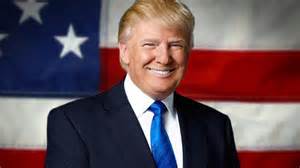
Donald Trump has now been President of the United States for a little over a week. Unlike other Presidents he has implemented many of his campaign promises without delay. Of those the most controversial is the enactment of a 90 to 120 day ban on visas and immigration from several nations , and denial of entry to those holding valid Green Cards, until there is a satisfactory process in place to screen potential terrorist from the US. Many in the US and others around the world have protested this ban and legal action has brought a suspicion to parts the order. The problem with the Executive Order is that it goes against everything America has stood for, except self-preservation.
As I write this I must in all honesty tell the reader that this is not the first time something like this has occurred, nor is it the first in modern times. The most recent was a pause in visas for Iraqi refugees by President Obama in 2011. While it is argued that the Obama ban was more limited in scope, only refugees, it was within the same context to stop terrorist from entering the country. Trumps is more wide ranging in that it stopped ALL visa applications, canceled those that were already approved and denied those granted permanent resident status, Green Card. Prior to this however were bans on classes of people that were longer and more dire.
Exclusion of the Chinese:
President Chester A. Arthur, Signed on May 6, 1882. The Chinese Exclusion Act banned “skilled and unskilled laborer’s and Chinese employed in mining” from entering the US for 10 years, it was the first significant law restricting immigration to the country. When it expired it was extended for 10 more years.
Jewish refugees during World War II:
President Franklin D. Roosevelt argued that German Jewish refugees posed a serious threat to the country’s national security. Drawing on fears that Nazi spies could be hiding among the refugees he limited the number of German Jews who could be admitted to 26,000 annually.

Anarchists banned:
In 1903, President Theodore Roosevelt signed the Anarchist Exclusion Act which banned anarchists and others deemed to be political extremists from entering the US.
Communists banned:
Passed by Congress on August 23, 1950, despite being vetoed by President Harry Truman.
The Internal Security Act of 1950 – also known as the Subversive Activities Control Act of 1950 or the McCarran Act – made it possible to deport any immigrants believed to be members of the Communist Party.

Iranians:
President Jimmy Carter cut diplomatic relations with and imposed sanctions on Iran in 1979. He also banned Iranians from entering the country.
Ban on HIV positive persons:
In 1987, under President Reagan, the US banned HIV positive persons from arriving in the US. The laws were influenced by homophobic and xenophobic sentiment towards Africans and minorities.

President Trump has issued a new ban to last from 90 to 120 days that is designed to give time to institute a new process for admitting persons from regions as designated. The problem with this new ban is that it is too broad and was poorly thought-out and executed. The agencies responsible for enforcing the ban were neither consulted nor informed as to the intent or implementation. I would offer the new president a word of advice, you are no longer a CEO of a company but the leader of a nation. While even most companies, preparing a new product roll out, look to get buy-in from stake-holders, it is more incumbent on the president to talk to congressional leadership and his cabinet. I understand from the experience of business this may have been considered a trial balloon or a Beta test but the division in the US today will not allow for this.

Now to the upside to the ban. For too many years the immigration system in the US has been broke, and I do not mean only on the Mexican border. I have friends from the Middle East, especially from Kurdistan, who wait far too long to get visas either for themselves or family, for no other reason than the draconian rules and regulations that make the process glacially slow. For far too many years the congress has bemoaned this fact and failed to do anything about it. The reaction to the ban may be the stimulus needed to “Reboot” the system. Are there legitimate concerns with a too weak or open border process, yes. My maternal grandparents immigrated from Italy when Italian immigrates where not welcomed. My mother-in-law was a refugee from Nazi Germany after the war and even though she was living in a refugee camp the vetting process took a long time and she had to have a relative in the US vouch for her and a job waiting. While she was going through the process many actual war criminals where let into the country. This last is important as we analyze further.

The cause of the ban put in place by President Obama was the discovery of two Iraqis who had made it through the process and were in the US planning to send support to Al-Qaida in Iraqi. The two were in the US as asylum seekers and had been bomb makers in Iraq and their fingerprints were discovered on a piece of an IED. In other words, they should never have been let in. With the individual attacks over the years such as Ft. Hood, San Bernardino, Boston and Florida as well as the problems seen in Europe coupled with a lack of any concrete actions by the Obama administration to act, Donald Trump acted.

The actions taken on the ban, in my opinion, were too harsh, too wide spread and implemented without thought as to impact and consequences. I give thumbs up to intent, protecting the country, but thumbs down on implementation. In business, there is always time to correct a mistake, not always in government actions. In this case, there is time to repair the damage and continue to move forward. Donald Trump is a far different person then was Barack Obama, or most other politicians. He will move too quickly and make mistakes so we need to get used to it. The makeup of the US government with its checks and balances will hold most of the executive actions in place.

As I have said before I was not a supporter of Trump during most of the primaries but did support him in the end as being the best of the chooses given us. No this is not a resounding endorsement but I am confident that his ability to learn far exceeds others and that given time he will find the middle ground that US policy so desperately needs. In the meantime, it’s going to be a wild ride


Kurd vs. Kurd, Us vs. Them


Kurd on Kurd, Us vs. Them

The world is becoming more divided then it has ever been. Much can be attributed to the modern age shrinking the world. News media and internet access allows for more information as well as misinformation flow. Misinformation and disinformation drive the world today. It is normal human instinct to divide into groups. These groups then distance themselves from the other groups. Our group becomes “us” their group becomes “them.” Sooner or later one group becomes jealous of the other and demands what the other has. This leads to war. War in ancient times would lead to the subjugation or annihilation of one group by the other. As man became more accustomed to dealing with “them” different resolutions came to pass. Paying taxes or tribute was enough to allow “us” to leave “them” alone to continue to grow. More recently we have returned to the violence of us vs. them. When one group is of the opinion that they are more than right, but anointed. The most obvious case is ISIS. It is their determination that they are the sole interpreters of Islam. Anyone or any group that thinks otherwise is to be killed. This is justified by the fact that the violent act is done in the name of virtue. It is in fact altruistic. In his book “Not in God’s Name” Rabbi Jonathan Sacks indeed calls it altruistic evil.

Examples of the us and them problems are evident across the world, not to the extent of the ISIS implementation, but bad. Brexit is an example. The people of the United Kingdom chose to leave the European Union based on an “us vs. them” viewpoint.  While it started out as an economic union, the European Common Market, it became a political union in 1993. By the early 2000’s there were already rumblings of discontent due to the rules and regulations coming out of Brussels. The influx of refugees from Syria and North Africa exacerbated the problem because of the EU’s open borders. This at least was the excuse given as the union began to have growing pains. The fact is that it became “Us vs. Them.”  Europe is a continent not a country. It is filled with different languages and cultures. While everything was going along fine there was no problem. Then came the Euro crisis with Greece, Italy, Portugal and Ireland. This opened up the first cracks and this has brought us to today. There are other examples today of “Us vs. Them.” In the United States we have the Black lives Matter movement pitting black America against the police. An in Iraq we have the problem of Kurds vs. Kurds.

The “Us Kurds vs. the Them Kurds” is not new, we only have to go back the 1990’s to revisit the Kurdish Civil war. KDP vs. PUK. In this time regional powers played the Kurds against themselves. Saddam playing the KDP off of the PUK which had Iran’s backing and Turkey pulling strings to keep the thing alive. Today much of the old animosity remains. While the Kurdish people are at the best time in history to declare independence and have a country, they are forming up against themselves. The old social “Us vs. Them” is coming to once more deny the Kurds a homeland. While there is no doubt that much of the feelings are genuine it also must be considered who has the most to gain from this.

In many cases there are legitimate concerns. While it is easy to argue the limits of a Presidential term it is harder to argue rule of law. There is no constitution for Kurdistan, it’s still in draft. With no law there is really no limit. There is an agreement but all sides seem to maneuverer around that whenever they want.  The Kurds are then facing the dilemma of who is right and who is wrong. But when it is “Us vs. Them” the answer is always easy, we are right and they are wrong. When one side or the other entrenches themselves in righteousness it becomes impossible to extricate yourself from a position, it also becomes easier to be manipulated.

The current crisis between KDP vs. PUK/Goran will not lead to a position that either side actually wants. The outcome should be become a unified country, a single entity, then start from scratch to build a nation. This is difficult, it requires that the past be relegated to the past. Masoud Barzani was never the President of an independent Kurdistan, so the past is forgotten. The KDP, PUK, Goran and the rest were never a sitting body for an independent Kurdistan, so a new government is formed. The other options are to do nothing and maintain the status quo, or move on to violence which is the typical end of an entranced “us vs them” problem. A full out split of us and them into a SW Kurdistan and SE Kurdistan. Ultimately these last options will result in a stronger neighbor absorbing the geographic region and the Kurds just go on fighting each other.

Until the Kurdish people can become one and together “Us,” and relegate Turkey, Iraq, Syria and Iran to the status of “Them” there will not be a chance to become Kurdistan. Until Kurdistan the rest of the arguments amongst the Kurds are meaningless.        

Iran, the Deal and Aylan


10462645_990485250973067_622483251919555318_n[1]

A recent Column of mine, reproduced below, spoke to the impact the Iranian deal will have on the region including Kurdistan. Today I would like to expand on this in light of the death of 3 year old Aylan Kurdi. I think first off we need to restructure the facts. Aylan and his family are Kurds from Kobane and did leave the village. However they left three years ago to go to Turkey after fleeing the fighting. They had lived in Damascus, then Aleppo, before going to Kobane. What this means is that the start of this tragedy is directly related to the Assad regime and its Iranian supporters. Without Iran’s direct support to Damascus it is likely the regime would have fallen and young Aylan would have been born in a time of peace. It has now become likely that the executive agreement President Barrack Obama presented to the US Congress will be enacted, not by congress whose majority rejects it, not by the people of the United States, whose majority reject it but because 34 Democratic Senators will allow the president to have a sustained veto. The fighting will go on as 34 senators allow the release of billions of dollars and remove the sanctions on the largest exporter of terrorism in the world today. There have been and will be many more Aylan’s, not only in Syria or Turkey but in Iraq, Lebanon and Iran. Unless another becomes this visible most will not be seen and the tragedy will go unnoticed. I repost this as a reminder of what is happening and a warning of what will become.

How will the Iran deal impact Kurdistan?

Posted on NRT English 7/22/15

The recent agreement between Iran and the E3/EU+3 will have long term consequences on the region, including Kurdistan. The aspect of stopping Iran’s march to a nuclear weapon aside, the removal of sanctions will allow an increase in Iranian mischief in the region. The world at large has taken little notice of Iran’s brutal treatment of its Kurdish population, and will be even less concerned once commercial trade is reopened.

The immediate impact to Kurdistan will come from the anticipated $150 billion windfall that will come from the immediate release of sanctions.  Iranian President Hassan Rouhani announced the increase of the budget for the IRGC from $6.5 billion to $9 billion and the agreement removes the IRGC and its commanders from the sanctions list. This will allow the IRGC greater capability to arm and control Shia militias in Iraq, and further reduce Iraqi government control of its internal security.

How does this effect Kurdistan? This strengthening of Iranian influence will have a serious impact on the relationship the KRG has with the government in Baghdad. The KRG budget is busted and Kurds across the region are under increasing pressure from ISIS. The strategy of Iran seems to be to maintain chaos in the region in order to justify its military assistance to Shia militants, such as Hamas and Hezbollah, as well as in Iraq. To this end, it is in Iran’s best interest to keep ISIS a threat to the region, in a defensive position, but not defeated. Kurdish Peshmerga forces have shown a great ability to stop and defeat ISIS fighters but are potentially running short of supplies, with Baghdad under increasing influence of Tehran, resupply for the Peshmerga is doubtful.  European nations have lately filled the gap but some of the bigger donors, such as Germany, will soon be looking to reestablish commercial ties with Iran, which may leverage this desire to reduce support for the Kurds.

Beyond the crisis for the Peshmerga, Iraqi Kurdistan is under increasing internal social and political pressure. With a faltering economy and calls on the current leadership to become more democratic, the road is open for Iran to ferment discord. With an influx of money to one of the political parties and a promise of military aid, Iran could weaken and split Kurdistan while keeping attention on the external threat of ISIS. Turkey would also likely join in with an eye to increased ties to the Iranian energy sector and the increase in natural gas from Iran. If Turkey can benefit economically from the removal of sanctions and see a reduction in Kurdish influence, it would solve two problems at once.

Whether or not Iran keeps to its deal to reduce it capability to produce a nuclear device is years down the road. The impact of sanctions relief however is imminent and for Kurdistan potentially dangerous. If the non-nuclear aspects of the agreement were removed, it would benefit the region and Kurdistan

The Almost Constitutional Crisis in Kurdistan


KRG President BRZANI

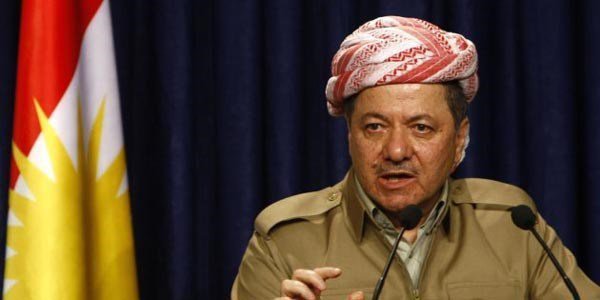
Much has been said and written about the current crisis in the Kurdistan region of Iraq that does not entail ISIS. On August 20th the term of office for President Masoud Barzani was supposed to have ended. In fact is was supposed to have ended two years earlier but was extended by the Kurdish Parliament. Because the term of office has ended, and there being no new elections, the question of legitimacy of the presidency is in play. Kurdistan has been called the model that the rest of Iraq should follow. For the last ten years it has seen economic growth and relative peace and stability. There have been rough patches and problems both internally and with the federal government in Baghdad. Currently the region is under tremendous threat from external sources. Both the terrorist group ISIS and Turkish incursions have put tremendous pressure on the Kurds and their government. Battles with the central government over budget sharing and oil sales have left the Kurdistan Regional Government cash strap and unable to pay its own people or army. Today however opposition politicians and a youthful diaspora see the main threat to Kurdistan as whether or not Barzani has a right to remain in office.

There are some areas which must be addressed. First: Barzani called for elections last June. This may have been a political maneuver knowing that it would be next to impossible to achieve. The electoral board did say it would take six months to set up, to date no elections have been scheduled. Second: When submitted to the Kurdistan Consultative Council, part of the Kurdish government’s Ministry of Justice authorized to provide decisions on legal disputes between government agencies, it was determined Barzani could remain in office for two more years. This decision was met with rejection by those Members of Parliament opposed to Barzani. Third: prior to the next election opposition MP’s want to change the constitution to reduce the office of the President to one of little power, only a ceremonial office responsive to Parliament. Last: but assuredly not least, is the burning problem that all of this revolves around constitutional questions, when in fact there is no constitution.  The draft constitution was never ratified as required and its authority is still pending.

From a Western perspective constitutions are the supreme law of the land. Amongst other things constitutions set up the forms of government and delineate the powers of the different branches. Under the draft constitution of the Kurdistan region the office of the president has executive authority and the president is elected by popular vote, with a term of office limited to two four year terms. The parliament is elected buy single person vote of party lists and there is to be a Supreme Court, called the Constitutional Court of Kurdistan in the draft constitution. This last is a serious deficiency as there currently is no court. Under the draft constitution the courts functions are.

Article 95:

The Constitutional Court shall have jurisdiction over the following matters:

First:

Explain the stipulations of the article of the Kurdistan Region’s Constitution.

Second:

1-            Monitor the constitutionality of the laws, based on a request from the President of the Kurdistan Region, the Council of Ministers, ten members of Parliament, or any concerned party.

2-            Decide the legality of decrees, regulations, resolutions and instructions, based on the request of any concerned party.

Many opponents of Barzani are calling for rule of law to be applied while his supporters are saying he is within his legal rights to remain. The Constitutional Court would be the natural venue for resolution, if it existed.

The big questions now are, does the Parliament have the authority to do anything? Does the President have the authority to do anything? Under what authority does the Kurdistan Regional Government exist?  What law rules? Both the parliament and the president are operating under de facto authority which can be extended or removed by the will and whim of political power.

“Kurdistan does not have a constitution and it does not have a high court that is dedicated to its interpretation or looking into such sovereign issues. If this battle became a legal one, there is no mechanism in place to make a final decision on this.”

“It’s the politics that decide what happens to the law, rather than the law deciding what happens to the politics. Everything here is politicized, and this issue is a political one,” said Dlawer Ala’Aldeen, president of the Middle East Research Institute (MERI), a think tank based in Erbil.

I am not putting forth a legal argument for the retention of Barzani nor am I suggesting the Parliament do nothing to move the region forward. I am suggesting that there are a number of very serious issues facing the region that must be dealt with before two branches of government clash over power. First the region must be made physically secure, ISIS must be defeated. Second the economy must be energized so that the people can survive. Next either make peace with the central government or declare independence. The Kurdish people deserve a functioning government. They deserve what was promised them at the end of the war. They deserve freedom.   I would quote the four freedoms from FDR’s 1941 State of the Union Speech, the people must have:

Freedom of speech

Freedom of worship

Freedom from want

Freedom from fear

If an election can be held, hold one. If you want to amend the constitution ratify the draft you have and then amend it, or write a new draft and get that one ratified.

It has been pointed out that all of the opposition parties, not sure how they are opposition since they control 51% of parliament, are opposed to Barzani continuing as president, then why can’t they come together and pass a resolution, or at least put one forward. Please for the sake of the people put politics aside and move forward.

Turkey, PKK and the Kurds


20150517_184500[1]

Why the Kurds Must Move Forward United and Why Turkey is Resisting the Future

By Paul Davis

As many of you know, and for those who don’t I will tell you, I am a long time supporter of Kurdish unity and Kurdish independence. As you can see by my photo and name I am not Kurdish. I am an American, originally from New Jersey, now living in Virginia. My opinions are shaped from a lifetime of studying history and politics and a career in intelligence.. I give this introduction so my readers will understand my positions.

Turkey is a country that has faced great change in the last century from the base of a once great empire through defeat and breakup and resurrection. Kemal Mustafa Ataturk saved Turkey from falling into the trap many of the new nations did after the first world war. Turkey carved out a new and forward moving country whose people enjoyed political and economic freedom and growth. There were of course problems, there always are, but for the better part of the 20th century  the country moved forward. Recently however Turkey is backsliding both politically and socially. This is a period of change that can be documented in almost any society. This is not a good or bad period, just one that happens because societal changes sometimes happen faster than societies can accept. During this time societies look backward toward a time of a better life and greatness. In fact these times were never better and the perceived greatness was never all that great, at least not for the average person.

The Kurdish people have a different perspective on the world, one that produced a history and a society different than that of  conquerors that ruled the Kurds. What they have is a culture shaped by the different societies under which they have lived but a society that has evolved into  its own uniqueness. The Kurdish people are not however immune to the traps of history and are themselves now caught in that period of change. Like Turkey they can move forward or try to move back, the latter never a successful option. What they and the Turks cannot do is remain where they are.

Much of recent Kurdish history is covered in blood and social and political alienation. As stated above Turkey moved forward in the 20th century, but left behind its Kurdish minority. In point of fact, Turkey refused to admit it had a Kurdish minority and moved to forcibly assimilate them into the new Turkey, again history should have told them this is never a good idea. A number of Kurdish political movements grow up, and most died, in this transitory period. The Kurds fought the Turks, the British, the Iranians and the Syrians. These fights resulted in the current group of political parties that for the most part have their own military. These include the KDP. PUK Gorran, PJAK, PYD, the HDP, and to the point of this paper the PKK.

While all  parties evolved from a common base of Kurdish nationalism they have traveled different roads to arrive at where they are today. In Iraq the KDP is the oldest of the major movements and as such tends to be more conservative, based on tribal and familial rule . The PUK which broke from the KDP derives its base philosophy from the political left and is considered a center-left party. Gorran which broke from the PUK is what in today’s world would be considered progressive. While philosophically different they have one thing in common, they are responsible for running a government, providing basic services and protection. They interact with the central government as well as play on an international political stage.

Those Kurdish parties outside of Iraq, with the current exception of HDP, do none of the above.  For the most part these other organizations are ideologically driven insurgencies with  militias. Both the PKK and the YPG (militia of the PYD) have recently fought valiantly against ISIS. But is fighting enough to claim leadership. have any of these parties provided food, clothing, housing or jobs to a general population that they govern.  I have just read some of the most recent writings coming from the PKK and they brought me back to my college days in the 1970’s with the discussions of total freedom and release from servitude. The socialist and anti-capitalist, non-statist world to come. The only thing missing were unicorns and rainbows. These are easy statements for an organization to make that has no actual duties or requirements to the average citizen. The PKK took to the mountains to plan their utopia and there they stay, except to come out and kill.

Turkey on the other hand does have these duties to its citizens, and in the case of its ethnic Kurdish population abandoned them. The continual repression of the Kurds and the suppression of Kurdish ethnic identity caused the existence of the PKK. For the last three decades Turkey and the PKK fought a running battle. Changes on both sides continued. For Turkey the transition was from a militarized democracy to an elected democracy to, for the last decade, a one party rule that mimics democracy. The PKK for its part started out as radicalized Marxists, through a form of pragmatic socialism to what they are today, a bureaucratic insurgency claiming socialist values . The bottom line however is that neither side has much to show for its efforts against the other.

Now to the KRG. The Kurdistan Regional Government in Erbil Iraq is the only internationally recognized body that has any legitimate authority relative to Kurdish interest. They have been legally entitled by the constitution of Iraq. They have been accepted by the international community as the Kurdish entity that speaks for the Kurds. With this power comes responsibility and restrictions. While many will argue that the KRG is not a democracy but an oligarchy it is the closest thing the Kurds in Iraq have to self rule. Is it democratic – a little, is it corrupt – very likely, is it legitimate – yes.

Putting all of this together;

Turkey is a legitimate government, regardless of how far it has traveled toward dictatorship. Dictatorial regimes are legal entities until they piss off the wrong group. This generally takes a long time. We can look to Iran and North Korea as examples of dictatorships that violate international law and continue to function.

The PKK has no international legitimacy, regardless of how much it feels it does through its Ideology and international mindset, it is not a nation and when it commits acts of violence it does so outside of law and international standards. It is not a state and only a state, according to Weber has “ a monopoly of the legitimate use of physical force. ”

The KRG is a legitimate regional government with international standing, regardless of how some citizens feel disenfranchised by the ruling elite. On the domestic and international stage they have the authority to act as any government entity and as a semi-autonomous region they have their own military, the Peshmerga.

Turkey is a legitimate government that currently has lost the moral high ground. The recent attack on Kurdish positions in Iraq and Syria have been conducted under the cover of fighting terrorism. Until very recently the Turkish government would not get involved in the fight against ISIL. In fact they stood by while ISIL attacked its neighbor Iraq and made gains in Syria into territory claimed by the Kurds. Two important things have happened to change Turkish minds. The first is that the Kurds fought back and not only recaptured lost territory but expanded into territory they did not control before. In conjunction they also did what they have not done before, effectively cooperated. The second, and more important thing to happen was the ruling party lost the majority in the  last election and is in jeopardy of  losing control of the government.

The first item, Kurdish victory and cooperation are terrifying to the Turks who have always feared their indigenous Kurdish population’s desire for freedom or, at the least, autonomy. The second is even more frightening to the ruling party elite who are losing control over a citizenry looking for economic growth and political freedom. The ruling party, the AKP, has ruled over what has become a safe and stable country for the last 12 years. With rising expectations and no existential threat the people looked to change.

The two winning parties need to build a coalition in order to form a new government. While neither one likes the other they both have no love of the AKP. The two avenues to follow would be for the two parties to swallow their pride and form a government or if too much time passes for the President to call for new elections. With no change a new election could be more devastating for the AKP and give enough seats for one of the other parties to form a government. What is needed is a crisis to turn the tide.

For the Turkish government the Kurds have always been the go to crisis and this time is no different. Of course this time, as in the past, the PKK gave them an excuse by attacking and killing 2 Turkish police officers then taking credit. Sending jets to attack PKK positions in Iraq, over and over, is not a justifiable or proportionate response. It is however not an unexpected response given the current state of affairs with-in Turkish politics. Recent polls show AKP growing in popularity since the violence started.

The PKK for its part has continued to foment its version of revolution against the Turkish government. Make no mistake the PKK is well armed and funded, but is impotent relative to its founding purpose. I would equate the current state of the PKK with that of the Colombian guerrilla movement The FARC. The PKK has past its zenith and to use an economic term is past the point of  diminishing returns. The best way the Kurds in Turkey are going to achieve their aims today is politically. The recent strong showing of the HPD in the last Turkish election should be an indicator of what can be done.

Both the AKP and the PKK are opposed to an open democratic resolution to the problems faced by Turkey and the Kurds in the region. To be honest the PKK cannot defeat the Turkish military, and it should be obvious, by now, will not wear down Turkish resolve. Equally obvious is the fact that Turkish military action will not defeat the PKK, in fact it makes it stronger.

The Kurdish future, today, lies in the ballot box. The true aims of Kurdish unity and independence can not be won through force of arms. Acknowledging that a lot of what the Kurds have in Northern Iraq was won in battle, it was not just the Kurds in the fight but the world. At the end of the day it was through politics and diplomacy that the KRG rose to the level of legitimacy. The west is not sending troops to fight the Kurds but diplomats to negotiate treaties.

I have not forgotten ISIS or the other factors that have the region in turmoil. As I said in the beginning I am a student of history and will say that ISIS and the rest of those who are walking backwards will eventually disappear into the dustbin of time.  It is important to continue to move forward to separate yourself from the rest. A warning however is that ISIS will not go quickly or quietly and the world needs to unite to defeat this evil.
The Iran Nuclear Deal: Audacity of Arrogance


Iran Deal

OK I did it, I read the Joint Comprehensive Plan of Action (JCPOA) that outlines the deal the US and the EU made with Iran in regards to Iran’s nuclear program. My head hurts, my eyes are bleeding and I am very frightened. The agreement is a total capitulation to a terrorist regime bent on regional hegemony and total subjugation of any person or country that it deems an enemy. First off, Iran gives up nothing concrete and receives a number of concessions with nothing more than a promise to stop what they have been doing.   Now the president tells us that this is a good agreement that stops Iran from moving down the road to building a nuclear device. “After two years of negotiations, the United States, together with our international partners, has achieved something that decades of animosity has not: a comprehensive long-term deal with Iran that will prevent it from obtaining a nuclear weapon,” the president told the country Tuesday morning, I just don’t see it. Had a country other than Iran been involved I might have more faith, but Iran has not shown itself to be trustworthy. The diplomatic writing lays out the responsibilities of the parties. In the third provision of the preamble it states that “Iran reaffirms that under no circumstances will Iran ever seek, develop or acquire any nuclear weapons.” In 2000 the North Koreans promised the United States and subsequently in the Six party Talk that “Both sides commit not to nuclearize the Korean Peninsula. The United States must “provide formal assurances” not to threaten or use nuclear weapons against North Korea. Pyongyang is required to “consistently take steps” to implement the 1992 North-South Joint Declaration on the Denuclearization of the Korean Peninsula. As history shows, all of the talks and frameworks and agreements broke down and North Korea is now a nuclear power. What will keep Iran from doing what North Korea did? The JCPOA spends a lot of time on the need for the US and EU to end any sanctions and to ensure the lifting of UN sanctions, but not much on what happens should Iran renege. There is discussion of a Joint Commission that is responsible for monitoring implementation and conflict resolution but not much else. The president speaks of the ability to snap back sanctions in the event Iran does not comply with the letter of the agreement, but the language indicates this will not be easy if even possible without full agreement of all parties.

This Agreement does little to stop Iran from nuclear research; it may slow it for a while but not stop it. To make matters worse I feel that this agreement which shows a lot of back pedaling on the part of the US will make it that much more difficult for us to negotiate in the future. Much of the concern of the west was stopping Iran from producing weapons grade nuclear material through uranium enrichment. In order to enrich uranium centrifuges are required. We know Iran has these and in the agreement they must phase out the largest number of those they have, which are denoted as IR-1 centrifuges. The fact is these are old designs that have never worked properly and have reduced the anticipated output, and it is expected that they would have been replaced by the more efficient IR-4 and IR-5 units which requires Iran to have less centrifuges to produce more enriched uranium. The concern was part of the Nov 2013 Joint Plan of Action, which required Iran not to feed the IR-5s, and it was assumed the IR-5 and other more efficient centrifuges would be disallowed in any agreement. Not only did Iran continue to feed the IR-5 but the JCPOA allows Iran to keep them provided use is only for R&D.

President Obama in announcing the agreement indicated that this is not built on trust but on verification. One of the activities Iran said it would not engage in is “Designing, developing, acquiring, or using computer models to simulate nuclear explosive devices. How do you stop a country from developing computer models? How do you verify that Iran is not doing so?

This is not a completely bad agreement if everything goes absolutely as planned. The odds of that happening are very remote given Iran’s track record of keeping promises. The “best’ we can hope for is that Iran focus’s its attention on funding their exporting of terror to Iraq, Syria and Lebanon with their new found wealth and delay developing a nuke for a few years.

I hope I am wrong. If I am wrong then nothing will go wrong. If however I and a number of others are right we could face a nuclear holocaust in the Middle East in a few short years. I hope congress has the courage to stop this agreement in its tracks. This is not a good deal, its not even appeasement it is a deal for deals sake. To ignore the potential of destruction just to build some self-indulgent legacy is the audacity of arrogance

Shi’a Militias Back in Play, What is Their Target


Once again, we see the Iraq Army (IA) bogged down in fighting ISIS, this time in Anbar. And once again we see the emergence of Iranian lead militias being called on to fill the gap left by an incompetent (IA)which does not seem to have the capacity or desire to take on ISIS. The call to deploy the Hashid Shaabi or Popular Mobilization Forces can be heard coming from a few Sunni tribes but it is likely the louder voices are coming from Tehran. The problem with this move is that the Iranian led Shi’a militias, while larger than the IA, would likely inflame the situation by taking retribution on the Sunni population as they did in Tikrit. The Anbar region holds no significance to Tehran but is of strategic importance to a unified Iraq. The arterial roads that connect central Syria with central Iraq, as well as control the Euphrates River makes the region of strategic importance. That is of course unless Baghdad or Tehran is not interested in securing the Sunni heartland and has other targets in mind.

Should the militias succeed in inflaming the Sunni tribes and driving them into the arms of ISIS. Then the Iranians will be there to support and protect and move on targets that make sense to them. What target meets the criteria of a Shi’a area, of value to Baghdad and Tehran, not currently under Baghdad’s control. The only answer is the Governorate and city of Kirkuk. Kirkuk has been in dispute since the fall of Saddam and currently under control of the autonomous Kurdish Regional Government (KRG). Full control of Kirkuk was not a fact for the KRG until the collapse of the Iraqi army following attacks by ISIS. The KRG while having de facto control of the city but limited control of the governorate now claims the prize of full control. The thing to also remember is that the only area of Anbar that the IA is fighting for is Baiji, which has the largest oil refinery in Iraq. Kirkuk by the way sits on top of one of the largest oil fields in Iraq.

So will the US retain any leverage over Baghdad and will Iraq remain a unified nation when all is said and done. Stay tuned and we will see.

Shia Militia
Shia Militia