All posts by pleasethink1

President Trump and What to Expect


On January 20th Donald Trump will become the 45th President of the United States. To some he is a God send to others the spawn of the devil. For most he will be the 45th President of the United States and their lives will go on uninterrupted. Is Trump the best choice for the job, I would argue the question is irrelevant. The country chose him and he will be in office for the next four years, that’s it. Did he win the popular vote, no, but again not relevant. Most voters in a majority of states elected him and that is how the system is set up. If the votes of just one state are removed from the total, Trump wins the popular vote. Clinton won a total of 65,844,950 votes of which 7,362,496 came from California. Trump won 62,979,879 of which 3,916,209 were from California. Removing the California totals then Trump wins by 581, 212 votes. One aspect and reason for the electoral college is so one state cannot be the determining factor in the results.  Trump won and is the next President of the United States. Why then as we approach the inauguration are so many preemptively striking at the heart of democracy. I have heard so many degrading terms used to describe the President-elect  I have to wonder how a man this evil could raise up to be what he has become. Of all the names Trump has been called I find Fascist to be the most disturbing. Many people have tried to compare him to Hitler (who by the way was a National Socialist) by people that have no idea what the philosophies of a Fascist or National Socialist comprise. The facts speak to only one of the names hurled at Trump to be almost true, misogynist. Although even that is debatable since the definition of misogyny is the hatred or contempt of woman and Trumps has said he believes woman are smarter than men, and proves it by having more woman in senior management positons then other corporations.

The fact is that through all the vitriol spewed out, no one can predict what a Trump presidency will be other than different than the outgoing administration.  It will be more pragmatic and less ideological as Trump is not married to either the Democratic or Republican party. He is in fact what most Americans are, both liberal and conservative. This should give him the ability to work with both parties, but it will not. Not until the leaders of the parties understand that he is not an ideologue but a pragmatist. The fact that he won in states such as Pennsylvania, Wisconsin and Ohio are indicators that he is more in touch with what should have been the Democratic party base then the party is. His stand on free trade puts him in opposition to the Republican party and there will be a fight. This is all good.

What we can expect to see is a shakeup of the political status quo and there will be some (figuratively) blood split.  All that can be asked is to give time for the process to begin and for the people to see though what will be a lot of noise and wait. If there is a need to oppose some actions go ahead, but wait for those actions, don’t protest what you perceive as intent, it’s not what you think. And there is the rub, you must begin to THINK ON YOUR OWN.

Kurd vs. Kurd, Us vs. Them


Kurd on Kurd, Us vs. Them

The world is becoming more divided then it has ever been. Much can be attributed to the modern age shrinking the world. News media and internet access allows for more information as well as misinformation flow. Misinformation and disinformation drive the world today. It is normal human instinct to divide into groups. These groups then distance themselves from the other groups. Our group becomes “us” their group becomes “them.” Sooner or later one group becomes jealous of the other and demands what the other has. This leads to war. War in ancient times would lead to the subjugation or annihilation of one group by the other. As man became more accustomed to dealing with “them” different resolutions came to pass. Paying taxes or tribute was enough to allow “us” to leave “them” alone to continue to grow. More recently we have returned to the violence of us vs. them. When one group is of the opinion that they are more than right, but anointed. The most obvious case is ISIS. It is their determination that they are the sole interpreters of Islam. Anyone or any group that thinks otherwise is to be killed. This is justified by the fact that the violent act is done in the name of virtue. It is in fact altruistic. In his book “Not in God’s Name” Rabbi Jonathan Sacks indeed calls it altruistic evil.

Examples of the us and them problems are evident across the world, not to the extent of the ISIS implementation, but bad. Brexit is an example. The people of the United Kingdom chose to leave the European Union based on an “us vs. them” viewpoint.  While it started out as an economic union, the European Common Market, it became a political union in 1993. By the early 2000’s there were already rumblings of discontent due to the rules and regulations coming out of Brussels. The influx of refugees from Syria and North Africa exacerbated the problem because of the EU’s open borders. This at least was the excuse given as the union began to have growing pains. The fact is that it became “Us vs. Them.”  Europe is a continent not a country. It is filled with different languages and cultures. While everything was going along fine there was no problem. Then came the Euro crisis with Greece, Italy, Portugal and Ireland. This opened up the first cracks and this has brought us to today. There are other examples today of “Us vs. Them.” In the United States we have the Black lives Matter movement pitting black America against the police. An in Iraq we have the problem of Kurds vs. Kurds.

The “Us Kurds vs. the Them Kurds” is not new, we only have to go back the 1990’s to revisit the Kurdish Civil war. KDP vs. PUK. In this time regional powers played the Kurds against themselves. Saddam playing the KDP off of the PUK which had Iran’s backing and Turkey pulling strings to keep the thing alive. Today much of the old animosity remains. While the Kurdish people are at the best time in history to declare independence and have a country, they are forming up against themselves. The old social “Us vs. Them” is coming to once more deny the Kurds a homeland. While there is no doubt that much of the feelings are genuine it also must be considered who has the most to gain from this.

In many cases there are legitimate concerns. While it is easy to argue the limits of a Presidential term it is harder to argue rule of law. There is no constitution for Kurdistan, it’s still in draft. With no law there is really no limit. There is an agreement but all sides seem to maneuverer around that whenever they want.  The Kurds are then facing the dilemma of who is right and who is wrong. But when it is “Us vs. Them” the answer is always easy, we are right and they are wrong. When one side or the other entrenches themselves in righteousness it becomes impossible to extricate yourself from a position, it also becomes easier to be manipulated.

The current crisis between KDP vs. PUK/Goran will not lead to a position that either side actually wants. The outcome should be become a unified country, a single entity, then start from scratch to build a nation. This is difficult, it requires that the past be relegated to the past. Masoud Barzani was never the President of an independent Kurdistan, so the past is forgotten. The KDP, PUK, Goran and the rest were never a sitting body for an independent Kurdistan, so a new government is formed. The other options are to do nothing and maintain the status quo, or move on to violence which is the typical end of an entranced “us vs them” problem. A full out split of us and them into a SW Kurdistan and SE Kurdistan. Ultimately these last options will result in a stronger neighbor absorbing the geographic region and the Kurds just go on fighting each other.

Until the Kurdish people can become one and together “Us,” and relegate Turkey, Iraq, Syria and Iran to the status of “Them” there will not be a chance to become Kurdistan. Until Kurdistan the rest of the arguments amongst the Kurds are meaningless.        

2016 Another Political Upheaval in America


My country, the greatest in the world with an unbelievable diversity in culture and citizens will soon be faced with an impossible choice for its next leader, or so it would seem

The Republican Party started out with 17 candidates running for the nomination. Five withdrew before the primaries even started while another 11 have since dropped out of the race. This leaves Donald Trump the presumptive nominee. On the Democratic Party side, we started with what could be called five viable candidates and are now down to two. Of the two, Hillary Clinton, is the choice of the party elite, and barring unforeseen problems or an indictment, likely the nominee.

Donald Trump was considered a side show and a joke. Coming with what many considered a ton of baggage and no political background, all he had was name recognition and a lot of money. The power elites and the political pundits saw no future in his candidacy and down played early victories. Hillary Clinton on the other hand was the anointed one.  In the beginning she had what was seen as a clear path to the nomination, since none of her announced opposition had the money, standing, name recognition or power base that she did.  

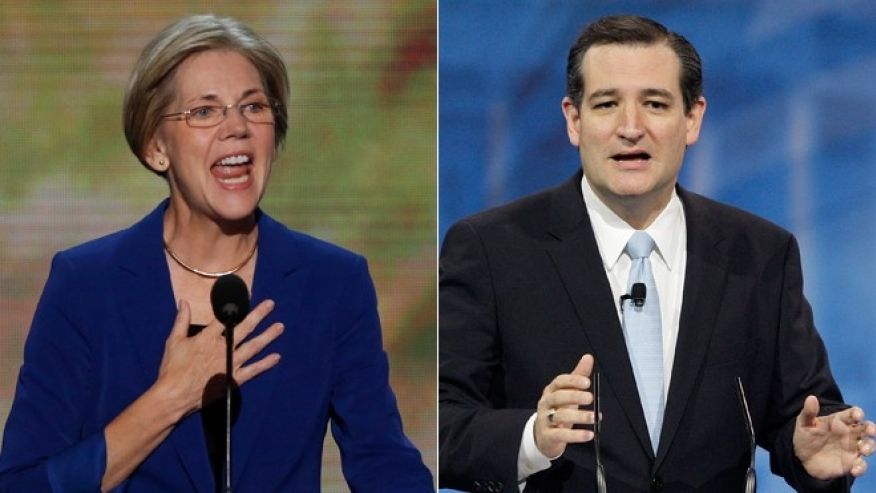
So what went wrong? Trump beat all of the political professionals while Clinton faced, and may still face, an unexpected challenge from an unlikely source, Sen. Bernie Sanders. Following the primary in Indiana Trump defeated Sen. Ted Cruz, his closest rival, by double digits, Sanders then beat Clinton. Up until the week before, the polls had Cruz winning and up until the day of the primary Clinton was in a tight race but still leading. Even with this victory Clinton is still on track to win the nomination based on her past wins and a large number of “Super Delegates” in her pocket. Still it was not the cake walk/ Coronation she was expecting.

Again, what went wrong? While the main stream media ignores the plight of the democrats there is no end to the death notice for the GOP. Within its own ranks there is talk of the end and the need to find the soul of the party. Maybe this is not the end of either party just a restructuring and/or an update.

From time to time there are upheavals in the body politic, such as the recent advent of the tea party on the right and the new progressive movement on the left. In the tumultuous ‘60s we saw Barry Goldwater on the right and George McGovern on the left rise, and then go down in flames.  The existence of political splits is not new in America. The Progressive Party of the US, better known as the Bull Moose party split from the republican party over policy difference between Teddy Roosevelt and William Howard Taft. Then there was the Native American Party also known as the Know-Nothing-Party, which formed to oppose immigration. The immigrants where mostly German and Irish Catholics. Any quick study of these parties will show that many of the issues then are the same as now.

Why then is the world coming to an end for the Republicans and what are the problems being faced by the Democrats. Historically these types of movements die out quickly. Neither of the parties above lasted long and neither of the reform movements of the left or right held power come the next election cycle. The difference today, if there is one, is 24/7 news coverage and social media. The political elites and the talking heads/pundits have not caught up with the change. The ascendance of Trump and the intransigence of Sanders campaign have caught those who should know better off guard. Rather than the party controlling the people the people are controlling the party.  I am very concerned about the reaction of the power elites. From the beginning the Democratic National committee has made no secret about their desire to see Clinton the nominee and has manipulated the process to ensure that outcome. Sanders has managed to challenge the status quo and has made a fight of it. The advantage the Sanders insurgency has over Trump is that he cannot be challenged over his position relative to the political spectrum, he is a liberal. The republican leadership however is having a hard time reconciling their definition of conservative and Trump. Sen. Ted Cruz continued to tout that he was the only “true” conservative in the race. Going so far as to call Trump a New York liberal.

Since Trump has apparently vanquished all others he is now facing a revolution of the republican leadership because he does not fit the ideal. Recently Speaker of the House Paul Ryan said in an interview the reasons he is having trouble backing Trump is that he does not understand “conservative values.” Among these values and principles Ryan pointed out was limited government, the role of the executive, and adherence to the Constitution. These points and some others have been used to show Trumps lack of orthodoxy. I would point out to those conservatives gathering feathers and melting tar that the one overriding principle of the country is the voice of the people. I must tell the Republican elites that Trump won the primaries and the people may be changing the definition of conservatism. 

Jonah Goldberg, a senior editor for the National Review in a past article quoted a conservative stalwart of the past, Russell Kirk, author of such books as “The Conservative Mind: From Burke to Elliot,” stating “Russell Kirk, who could not define conservatism in a paragraph, much less a sentence, would consider it folly to even try. Kirk wrote, “Conservatism is not a fixed and immutable body of dogma.” Rather it is a recognition that life often pits some values against others, and that men are not always brilliant at sorting out which value should trump which in any given situation. As Edmund Burke noted, “The nature of man is intricate; the objects of society are of the greatest possible complexity; and therefore no simple disposition or direction of power can be suitable either to man’s nature or to the quality of his affairs.”

In a similar vein William F. Buckley was asked in an interview if he agreed with the following:   Q. Book publisher Henry Regnery once said, “Conservatism is not a fixed and immutable body of dogma, and conservatives inherit from Burke a talent for re-expressing their convictions to fit the times.” Buckley agreed whole heartedly. So what’s up with today’s conservatives?

Nothing is the answer, it’s the so called conservative leadership that is the problem. While Clinton fights the “true” liberals of her party in her march toward the nomination we hear of many on the left bailing out and promising, at the least, not to vote. The well-known conservatives are doing the same and much worse, they are actively seeking an alternative candidate to run as a third party conservative. In other words, they are doing everything in their power to elect Hillary Clinton. The logic is that she will be so bad that they get to pick the candidate in 2020 after a disastrous four years of Clinton.

The irony of this is that major conservatives such as Bill Kristol are talking to Mitt Romney as a possible savior of the conservative cause and third party candidate. You remember Romney, he lost as the republican party candidate four years ago because 3 million conservatives sat out the election, as they are threatening to do this year. Romney is also the person who refused to run during the republican primaries. The Romney who held so much sway over the republican rank and file that after he came out and attacked Trump no one listened and Trump just continued to roll forward.

Many writers are asking what has happened to the party of Lincoln and saying things like Clinton is more conservative than Trump. I will remind those that the party of Lincoln was a third party that was considered the left wing progressive party of the time and stayed in power until FDR. The democrats did not begin there swing to the left until FDR and still were mostly conservative until JFK in the 1960’s.

What we are seeing today then may be nothing more than another swing and realignment of ideals. The stance conservatism of Goldwater day’s finally giving way to a more pragmatic branch of conservative. The beginning may well be traced back to Reagan and the Bush’s. The democrats on the other hand are holding to dogma at least 50 years out of date. What we are then actually seeing is what has always made America great, the people are taking charge and making changes. Power elites should not worry, they will adapt to the changes and once more be in charge as the people go back to their lives, with the warning that they can do this again, as they have done before.       
A Plea to Senate Democrats


An open letter to the gang of 42

 capitol

Ladies and gentlemen: I understand your need to play to your parties’ elite and your slavish devotion to the President, but your support of the executive agreement now before you must transcend politics. There are enough countries on this planet that have nuclear weapons there is no reason to add another, especially one that has shown no regard to the lives of its citizens or those of the region. Beyond the nuclear weapon aspect is the fact that Iran is an exporter of terrorism. I grant you that they have had tremendous success with what they have but this agreement will give them more money and weapons.

You must look past the claims that no better deal could be had or that it is this deal or war. Neither is true. The leadership and government of the Islamic Republic of Iran has never made any secret of its policies and they have never  acted  in accordance with international norms or laws. Iran’s raison d’etre is the exportation of the Islamic revolution is the destruction of Israel and all of western civilization

You must accept two items as articles of faith, Iran has no intention of living up to its end of the agreement and there is no intelligence service on earth that will be able to tell beyond the shadow of a doubt that Iran is cheating. We have been surprised by India, Pakistan and North Korea with their ascension into the nuclear club. Our intelligence assessment have been faulty on a number of issues and we will have no way of keeping tabs on Iran.

Congress has made a number of decisions that are based on political expediency. Some are good, some are bad, but for the bad there is always time to adjust or get a do-over. Ladies and gentlemen this is not one of those. If you get this one wrong it could mean millions die.

Please think long and hard. At the least allow open debate and let the people listen. Don’t get this wrong, the stakes are too high.

Iran, the Deal and Aylan


10462645_990485250973067_622483251919555318_n[1]

A recent Column of mine, reproduced below, spoke to the impact the Iranian deal will have on the region including Kurdistan. Today I would like to expand on this in light of the death of 3 year old Aylan Kurdi. I think first off we need to restructure the facts. Aylan and his family are Kurds from Kobane and did leave the village. However they left three years ago to go to Turkey after fleeing the fighting. They had lived in Damascus, then Aleppo, before going to Kobane. What this means is that the start of this tragedy is directly related to the Assad regime and its Iranian supporters. Without Iran’s direct support to Damascus it is likely the regime would have fallen and young Aylan would have been born in a time of peace. It has now become likely that the executive agreement President Barrack Obama presented to the US Congress will be enacted, not by congress whose majority rejects it, not by the people of the United States, whose majority reject it but because 34 Democratic Senators will allow the president to have a sustained veto. The fighting will go on as 34 senators allow the release of billions of dollars and remove the sanctions on the largest exporter of terrorism in the world today. There have been and will be many more Aylan’s, not only in Syria or Turkey but in Iraq, Lebanon and Iran. Unless another becomes this visible most will not be seen and the tragedy will go unnoticed. I repost this as a reminder of what is happening and a warning of what will become.

How will the Iran deal impact Kurdistan?

Posted on NRT English 7/22/15

The recent agreement between Iran and the E3/EU+3 will have long term consequences on the region, including Kurdistan. The aspect of stopping Iran’s march to a nuclear weapon aside, the removal of sanctions will allow an increase in Iranian mischief in the region. The world at large has taken little notice of Iran’s brutal treatment of its Kurdish population, and will be even less concerned once commercial trade is reopened.

The immediate impact to Kurdistan will come from the anticipated $150 billion windfall that will come from the immediate release of sanctions.  Iranian President Hassan Rouhani announced the increase of the budget for the IRGC from $6.5 billion to $9 billion and the agreement removes the IRGC and its commanders from the sanctions list. This will allow the IRGC greater capability to arm and control Shia militias in Iraq, and further reduce Iraqi government control of its internal security.

How does this effect Kurdistan? This strengthening of Iranian influence will have a serious impact on the relationship the KRG has with the government in Baghdad. The KRG budget is busted and Kurds across the region are under increasing pressure from ISIS. The strategy of Iran seems to be to maintain chaos in the region in order to justify its military assistance to Shia militants, such as Hamas and Hezbollah, as well as in Iraq. To this end, it is in Iran’s best interest to keep ISIS a threat to the region, in a defensive position, but not defeated. Kurdish Peshmerga forces have shown a great ability to stop and defeat ISIS fighters but are potentially running short of supplies, with Baghdad under increasing influence of Tehran, resupply for the Peshmerga is doubtful.  European nations have lately filled the gap but some of the bigger donors, such as Germany, will soon be looking to reestablish commercial ties with Iran, which may leverage this desire to reduce support for the Kurds.

Beyond the crisis for the Peshmerga, Iraqi Kurdistan is under increasing internal social and political pressure. With a faltering economy and calls on the current leadership to become more democratic, the road is open for Iran to ferment discord. With an influx of money to one of the political parties and a promise of military aid, Iran could weaken and split Kurdistan while keeping attention on the external threat of ISIS. Turkey would also likely join in with an eye to increased ties to the Iranian energy sector and the increase in natural gas from Iran. If Turkey can benefit economically from the removal of sanctions and see a reduction in Kurdish influence, it would solve two problems at once.

Whether or not Iran keeps to its deal to reduce it capability to produce a nuclear device is years down the road. The impact of sanctions relief however is imminent and for Kurdistan potentially dangerous. If the non-nuclear aspects of the agreement were removed, it would benefit the region and Kurdistan

The Almost Constitutional Crisis in Kurdistan


KRG President BRZANI

Much has been said and written about the current crisis in the Kurdistan region of Iraq that does not entail ISIS. On August 20th the term of office for President Masoud Barzani was supposed to have ended. In fact is was supposed to have ended two years earlier but was extended by the Kurdish Parliament. Because the term of office has ended, and there being no new elections, the question of legitimacy of the presidency is in play. Kurdistan has been called the model that the rest of Iraq should follow. For the last ten years it has seen economic growth and relative peace and stability. There have been rough patches and problems both internally and with the federal government in Baghdad. Currently the region is under tremendous threat from external sources. Both the terrorist group ISIS and Turkish incursions have put tremendous pressure on the Kurds and their government. Battles with the central government over budget sharing and oil sales have left the Kurdistan Regional Government cash strap and unable to pay its own people or army. Today however opposition politicians and a youthful diaspora see the main threat to Kurdistan as whether or not Barzani has a right to remain in office.

There are some areas which must be addressed. First: Barzani called for elections last June. This may have been a political maneuver knowing that it would be next to impossible to achieve. The electoral board did say it would take six months to set up, to date no elections have been scheduled. Second: When submitted to the Kurdistan Consultative Council, part of the Kurdish government’s Ministry of Justice authorized to provide decisions on legal disputes between government agencies, it was determined Barzani could remain in office for two more years. This decision was met with rejection by those Members of Parliament opposed to Barzani. Third: prior to the next election opposition MP’s want to change the constitution to reduce the office of the President to one of little power, only a ceremonial office responsive to Parliament. Last: but assuredly not least, is the burning problem that all of this revolves around constitutional questions, when in fact there is no constitution.  The draft constitution was never ratified as required and its authority is still pending.

From a Western perspective constitutions are the supreme law of the land. Amongst other things constitutions set up the forms of government and delineate the powers of the different branches. Under the draft constitution of the Kurdistan region the office of the president has executive authority and the president is elected by popular vote, with a term of office limited to two four year terms. The parliament is elected buy single person vote of party lists and there is to be a Supreme Court, called the Constitutional Court of Kurdistan in the draft constitution. This last is a serious deficiency as there currently is no court. Under the draft constitution the courts functions are.

Article 95:

The Constitutional Court shall have jurisdiction over the following matters:

First:

Explain the stipulations of the article of the Kurdistan Region’s Constitution.

Second:

1-            Monitor the constitutionality of the laws, based on a request from the President of the Kurdistan Region, the Council of Ministers, ten members of Parliament, or any concerned party.

2-            Decide the legality of decrees, regulations, resolutions and instructions, based on the request of any concerned party.

Many opponents of Barzani are calling for rule of law to be applied while his supporters are saying he is within his legal rights to remain. The Constitutional Court would be the natural venue for resolution, if it existed.

The big questions now are, does the Parliament have the authority to do anything? Does the President have the authority to do anything? Under what authority does the Kurdistan Regional Government exist?  What law rules? Both the parliament and the president are operating under de facto authority which can be extended or removed by the will and whim of political power.

“Kurdistan does not have a constitution and it does not have a high court that is dedicated to its interpretation or looking into such sovereign issues. If this battle became a legal one, there is no mechanism in place to make a final decision on this.”

“It’s the politics that decide what happens to the law, rather than the law deciding what happens to the politics. Everything here is politicized, and this issue is a political one,” said Dlawer Ala’Aldeen, president of the Middle East Research Institute (MERI), a think tank based in Erbil.

I am not putting forth a legal argument for the retention of Barzani nor am I suggesting the Parliament do nothing to move the region forward. I am suggesting that there are a number of very serious issues facing the region that must be dealt with before two branches of government clash over power. First the region must be made physically secure, ISIS must be defeated. Second the economy must be energized so that the people can survive. Next either make peace with the central government or declare independence. The Kurdish people deserve a functioning government. They deserve what was promised them at the end of the war. They deserve freedom.   I would quote the four freedoms from FDR’s 1941 State of the Union Speech, the people must have:

Freedom of speech

Freedom of worship

Freedom from want

Freedom from fear

If an election can be held, hold one. If you want to amend the constitution ratify the draft you have and then amend it, or write a new draft and get that one ratified.

It has been pointed out that all of the opposition parties, not sure how they are opposition since they control 51% of parliament, are opposed to Barzani continuing as president, then why can’t they come together and pass a resolution, or at least put one forward. Please for the sake of the people put politics aside and move forward.

The changing world of government contracting


Much has been written and said about government contractors recently. When I started in the field I came out of over 20 years of commercial business and was astonished at how the large government contractors were operating. At the time I worked for one of the big five contractors to the US Department of Defense (DOD). The wars in Afghanistan and Iraq were at there height and the DOD was throwing money at all types of contractors, large and small. I was at the time a district sales manager for a large plastic extrusion company and also a member of the Army Reserves. I was mobilized to active duty and sent to the Pentagon. After two years, as my active duty time was coming to an end, I was offered a job with a contractor and decided to take it, my company had gone through several changes and had just been bought by a foreign company. I started out as a direct labor individual contributor, in other words I was doing what I did on active duty only in civilian clothes. I was soon also put in charge of a small part of the team and then deputy project manager and ultimately I became the Program Manager of a different contract. I began to get more and more involved in the business of contracting versus the delivery of services to the government, and this is where I started to get a true education.

When I got to look behind the door I realized how different it was selling service to the government from selling to private industry. I then realized it should not be that different. The problem was that for most of the time the business was growing, it had little or nothing to do with the management of the contracts or business. The government needed bodies and the fast way was through contractors. Basically all a company had to do was produce compliant proposals and they would be assured of winning enough of them to make money. The problem with this was, that as successful as it was for the time, it was not a sustainable business model.

Those of us who have been in business long enough accept the fact that all businesses go through cycles.  As always happens the customer base begins to shrink and competition became an actual fact of life. What was once an asset, the senior leadership in these companies were, for the most part, retired or former military officers and government executives.  While these people understood the customers’ requirements, needs, and desires, they did not always appreciate the requirements, needs, and desires of business. I had many discussions the need to increase the margins on a contract and was told by one senior director “I don’t care about profit I am here to continue my service to my country.” Another time I asked a VP of Operations what the corporate minimum fee (profit) was, he said he did not think there was one and it depended on the contract (I later found out it was 8%). I suggested at one time we be careful about the salaries we were hiring at since we may be in trouble in the future when the salaries exceed the rates the customer is willing to pay. I was told that I was to interested in profit and that they would continue to grow by providing the best of the best and the customer would be willing to pay for the services.

Government contractors now find themselves in a strange new world. Due to reduced requirements and reduced budgets the customer is looking for lower numbers and lower rates. To be honest the government still wants the best of the best of the best, but wants them for up to 50% less than before.  The government continues to declare that they are looking for best value in a contractor but continue to issue contracts based on what is known as Lowest Price Technically Acceptable (LPTA) criteria.  Again to be honest the requests for proposals are in some cases released as LPTA. 

This is causing great confusion in the Business Development offices of companies large and small. In Corporate America there are a number of ways to adjust to a downswing in business. Proctor and Gamble for instance is reducing the number of products offered based on profit.  Others sell off lines or purchase smaller companies that will get them into a new market. Others merge to survive. Many of us remember when Lockheed, Martin, Northrup and Grumman were all separate companies. Some reorganize to reduce the number of middle and senior managers. Jack Walsh was famous for firing the lower 10% of his managers regardless of performance.

What does the contractor do? Much the same is the answer. Following inflated rates which inflated salaries the contractor is left either to reduce salaries and try to keep the long term employee or reduce the work force and replace the old with newer lower paid personnel. This last is usually the result and is not generally received well by the customer.  Some of the larger companies can cross finance to keep senior personnel on the customer’s site, but not for long. Smaller companies do not have this luxury and must work through the problems or be swallowed up by larger firms.

The world of government contracting is changing faster than many companies can adjust. That is why companies such as mine, JANUS Think, have come into existence.  Most companies are better at providing service then trying to understand the changing requirements of the customer, customers who do not themselves understand the changed. A company must be willing to accept the fact that they may not have in-house expertise on all matters. They may also come to realize that ii is more cost effective to hire consultants then retain personnel who in effect are not always fully utilized or burden personnel with excessive requirements that keep them from doing their actual jobs.

Paul Davis is the founder of JANUS Think dedicated to helping business expand and grow. Named for the Roman god of beginnings and transitions we will help you open doors to the future but keep you rooted to your values. With over 25 years of business experience JANUS Think can help you write effective marketing plans and wining proposals. We will always listen to you but will not be afraid to give our advice and the reasons for them.

Veteran owned and operated

.

  http:janusthink.wordpress.com


Turkey, PKK and the Kurds


20150517_184500[1]

Why the Kurds Must Move Forward United and Why Turkey is Resisting the Future

By Paul Davis

As many of you know, and for those who don’t I will tell you, I am a long time supporter of Kurdish unity and Kurdish independence. As you can see by my photo and name I am not Kurdish. I am an American, originally from New Jersey, now living in Virginia. My opinions are shaped from a lifetime of studying history and politics and a career in intelligence.. I give this introduction so my readers will understand my positions.

Turkey is a country that has faced great change in the last century from the base of a once great empire through defeat and breakup and resurrection. Kemal Mustafa Ataturk saved Turkey from falling into the trap many of the new nations did after the first world war. Turkey carved out a new and forward moving country whose people enjoyed political and economic freedom and growth. There were of course problems, there always are, but for the better part of the 20th century  the country moved forward. Recently however Turkey is backsliding both politically and socially. This is a period of change that can be documented in almost any society. This is not a good or bad period, just one that happens because societal changes sometimes happen faster than societies can accept. During this time societies look backward toward a time of a better life and greatness. In fact these times were never better and the perceived greatness was never all that great, at least not for the average person.

The Kurdish people have a different perspective on the world, one that produced a history and a society different than that of  conquerors that ruled the Kurds. What they have is a culture shaped by the different societies under which they have lived but a society that has evolved into  its own uniqueness. The Kurdish people are not however immune to the traps of history and are themselves now caught in that period of change. Like Turkey they can move forward or try to move back, the latter never a successful option. What they and the Turks cannot do is remain where they are.

Much of recent Kurdish history is covered in blood and social and political alienation. As stated above Turkey moved forward in the 20th century, but left behind its Kurdish minority. In point of fact, Turkey refused to admit it had a Kurdish minority and moved to forcibly assimilate them into the new Turkey, again history should have told them this is never a good idea. A number of Kurdish political movements grow up, and most died, in this transitory period. The Kurds fought the Turks, the British, the Iranians and the Syrians. These fights resulted in the current group of political parties that for the most part have their own military. These include the KDP. PUK Gorran, PJAK, PYD, the HDP, and to the point of this paper the PKK.

While all  parties evolved from a common base of Kurdish nationalism they have traveled different roads to arrive at where they are today. In Iraq the KDP is the oldest of the major movements and as such tends to be more conservative, based on tribal and familial rule . The PUK which broke from the KDP derives its base philosophy from the political left and is considered a center-left party. Gorran which broke from the PUK is what in today’s world would be considered progressive. While philosophically different they have one thing in common, they are responsible for running a government, providing basic services and protection. They interact with the central government as well as play on an international political stage.

Those Kurdish parties outside of Iraq, with the current exception of HDP, do none of the above.  For the most part these other organizations are ideologically driven insurgencies with  militias. Both the PKK and the YPG (militia of the PYD) have recently fought valiantly against ISIS. But is fighting enough to claim leadership. have any of these parties provided food, clothing, housing or jobs to a general population that they govern.  I have just read some of the most recent writings coming from the PKK and they brought me back to my college days in the 1970’s with the discussions of total freedom and release from servitude. The socialist and anti-capitalist, non-statist world to come. The only thing missing were unicorns and rainbows. These are easy statements for an organization to make that has no actual duties or requirements to the average citizen. The PKK took to the mountains to plan their utopia and there they stay, except to come out and kill.

Turkey on the other hand does have these duties to its citizens, and in the case of its ethnic Kurdish population abandoned them. The continual repression of the Kurds and the suppression of Kurdish ethnic identity caused the existence of the PKK. For the last three decades Turkey and the PKK fought a running battle. Changes on both sides continued. For Turkey the transition was from a militarized democracy to an elected democracy to, for the last decade, a one party rule that mimics democracy. The PKK for its part started out as radicalized Marxists, through a form of pragmatic socialism to what they are today, a bureaucratic insurgency claiming socialist values . The bottom line however is that neither side has much to show for its efforts against the other.

Now to the KRG. The Kurdistan Regional Government in Erbil Iraq is the only internationally recognized body that has any legitimate authority relative to Kurdish interest. They have been legally entitled by the constitution of Iraq. They have been accepted by the international community as the Kurdish entity that speaks for the Kurds. With this power comes responsibility and restrictions. While many will argue that the KRG is not a democracy but an oligarchy it is the closest thing the Kurds in Iraq have to self rule. Is it democratic – a little, is it corrupt – very likely, is it legitimate – yes.

Putting all of this together;

Turkey is a legitimate government, regardless of how far it has traveled toward dictatorship. Dictatorial regimes are legal entities until they piss off the wrong group. This generally takes a long time. We can look to Iran and North Korea as examples of dictatorships that violate international law and continue to function.

The PKK has no international legitimacy, regardless of how much it feels it does through its Ideology and international mindset, it is not a nation and when it commits acts of violence it does so outside of law and international standards. It is not a state and only a state, according to Weber has “ a monopoly of the legitimate use of physical force. ”

The KRG is a legitimate regional government with international standing, regardless of how some citizens feel disenfranchised by the ruling elite. On the domestic and international stage they have the authority to act as any government entity and as a semi-autonomous region they have their own military, the Peshmerga.

Turkey is a legitimate government that currently has lost the moral high ground. The recent attack on Kurdish positions in Iraq and Syria have been conducted under the cover of fighting terrorism. Until very recently the Turkish government would not get involved in the fight against ISIL. In fact they stood by while ISIL attacked its neighbor Iraq and made gains in Syria into territory claimed by the Kurds. Two important things have happened to change Turkish minds. The first is that the Kurds fought back and not only recaptured lost territory but expanded into territory they did not control before. In conjunction they also did what they have not done before, effectively cooperated. The second, and more important thing to happen was the ruling party lost the majority in the  last election and is in jeopardy of  losing control of the government.

The first item, Kurdish victory and cooperation are terrifying to the Turks who have always feared their indigenous Kurdish population’s desire for freedom or, at the least, autonomy. The second is even more frightening to the ruling party elite who are losing control over a citizenry looking for economic growth and political freedom. The ruling party, the AKP, has ruled over what has become a safe and stable country for the last 12 years. With rising expectations and no existential threat the people looked to change.

The two winning parties need to build a coalition in order to form a new government. While neither one likes the other they both have no love of the AKP. The two avenues to follow would be for the two parties to swallow their pride and form a government or if too much time passes for the President to call for new elections. With no change a new election could be more devastating for the AKP and give enough seats for one of the other parties to form a government. What is needed is a crisis to turn the tide.

For the Turkish government the Kurds have always been the go to crisis and this time is no different. Of course this time, as in the past, the PKK gave them an excuse by attacking and killing 2 Turkish police officers then taking credit. Sending jets to attack PKK positions in Iraq, over and over, is not a justifiable or proportionate response. It is however not an unexpected response given the current state of affairs with-in Turkish politics. Recent polls show AKP growing in popularity since the violence started.

The PKK for its part has continued to foment its version of revolution against the Turkish government. Make no mistake the PKK is well armed and funded, but is impotent relative to its founding purpose. I would equate the current state of the PKK with that of the Colombian guerrilla movement The FARC. The PKK has past its zenith and to use an economic term is past the point of  diminishing returns. The best way the Kurds in Turkey are going to achieve their aims today is politically. The recent strong showing of the HPD in the last Turkish election should be an indicator of what can be done.

Both the AKP and the PKK are opposed to an open democratic resolution to the problems faced by Turkey and the Kurds in the region. To be honest the PKK cannot defeat the Turkish military, and it should be obvious, by now, will not wear down Turkish resolve. Equally obvious is the fact that Turkish military action will not defeat the PKK, in fact it makes it stronger.

The Kurdish future, today, lies in the ballot box. The true aims of Kurdish unity and independence can not be won through force of arms. Acknowledging that a lot of what the Kurds have in Northern Iraq was won in battle, it was not just the Kurds in the fight but the world. At the end of the day it was through politics and diplomacy that the KRG rose to the level of legitimacy. The west is not sending troops to fight the Kurds but diplomats to negotiate treaties.

I have not forgotten ISIS or the other factors that have the region in turmoil. As I said in the beginning I am a student of history and will say that ISIS and the rest of those who are walking backwards will eventually disappear into the dustbin of time.  It is important to continue to move forward to separate yourself from the rest. A warning however is that ISIS will not go quickly or quietly and the world needs to unite to defeat this evil.

The Iran Nuclear Deal: Audacity of Arrogance


It did not get better over the weekend

pleasethink1's avatarpleasethink1

Iran Deal

OK I did it, I read the Joint Comprehensive Plan of Action (JCPOA) that outlines the deal the US and the EU made with Iran in regards to Iran’s nuclear program. My head hurts, my eyes are bleeding and I am very frightened. The agreement is a total capitulation to a terrorist regime bent on regional hegemony and total subjugation of any person or country that it deems an enemy. First off, Iran gives up nothing concrete and receives a number of concessions with nothing more than a promise to stop what they have been doing.   Now the president tells us that this is a good agreement that stops Iran from moving down the road to building a nuclear device. “After two years of negotiations, the United States, together with our international partners, has achieved something that decades of animosity has not: a comprehensive long-term deal with Iran that will…

View original post 698 more words

The Iran Nuclear Deal: Audacity of Arrogance


Iran Deal

OK I did it, I read the Joint Comprehensive Plan of Action (JCPOA) that outlines the deal the US and the EU made with Iran in regards to Iran’s nuclear program. My head hurts, my eyes are bleeding and I am very frightened. The agreement is a total capitulation to a terrorist regime bent on regional hegemony and total subjugation of any person or country that it deems an enemy. First off, Iran gives up nothing concrete and receives a number of concessions with nothing more than a promise to stop what they have been doing.   Now the president tells us that this is a good agreement that stops Iran from moving down the road to building a nuclear device. “After two years of negotiations, the United States, together with our international partners, has achieved something that decades of animosity has not: a comprehensive long-term deal with Iran that will prevent it from obtaining a nuclear weapon,” the president told the country Tuesday morning, I just don’t see it. Had a country other than Iran been involved I might have more faith, but Iran has not shown itself to be trustworthy. The diplomatic writing lays out the responsibilities of the parties. In the third provision of the preamble it states that “Iran reaffirms that under no circumstances will Iran ever seek, develop or acquire any nuclear weapons.” In 2000 the North Koreans promised the United States and subsequently in the Six party Talk that “Both sides commit not to nuclearize the Korean Peninsula. The United States must “provide formal assurances” not to threaten or use nuclear weapons against North Korea. Pyongyang is required to “consistently take steps” to implement the 1992 North-South Joint Declaration on the Denuclearization of the Korean Peninsula. As history shows, all of the talks and frameworks and agreements broke down and North Korea is now a nuclear power. What will keep Iran from doing what North Korea did? The JCPOA spends a lot of time on the need for the US and EU to end any sanctions and to ensure the lifting of UN sanctions, but not much on what happens should Iran renege. There is discussion of a Joint Commission that is responsible for monitoring implementation and conflict resolution but not much else. The president speaks of the ability to snap back sanctions in the event Iran does not comply with the letter of the agreement, but the language indicates this will not be easy if even possible without full agreement of all parties.

This Agreement does little to stop Iran from nuclear research; it may slow it for a while but not stop it. To make matters worse I feel that this agreement which shows a lot of back pedaling on the part of the US will make it that much more difficult for us to negotiate in the future. Much of the concern of the west was stopping Iran from producing weapons grade nuclear material through uranium enrichment. In order to enrich uranium centrifuges are required. We know Iran has these and in the agreement they must phase out the largest number of those they have, which are denoted as IR-1 centrifuges. The fact is these are old designs that have never worked properly and have reduced the anticipated output, and it is expected that they would have been replaced by the more efficient IR-4 and IR-5 units which requires Iran to have less centrifuges to produce more enriched uranium. The concern was part of the Nov 2013 Joint Plan of Action, which required Iran not to feed the IR-5s, and it was assumed the IR-5 and other more efficient centrifuges would be disallowed in any agreement. Not only did Iran continue to feed the IR-5 but the JCPOA allows Iran to keep them provided use is only for R&D.

President Obama in announcing the agreement indicated that this is not built on trust but on verification. One of the activities Iran said it would not engage in is “Designing, developing, acquiring, or using computer models to simulate nuclear explosive devices. How do you stop a country from developing computer models? How do you verify that Iran is not doing so?

This is not a completely bad agreement if everything goes absolutely as planned. The odds of that happening are very remote given Iran’s track record of keeping promises. The “best’ we can hope for is that Iran focus’s its attention on funding their exporting of terror to Iraq, Syria and Lebanon with their new found wealth and delay developing a nuke for a few years.

I hope I am wrong. If I am wrong then nothing will go wrong. If however I and a number of others are right we could face a nuclear holocaust in the Middle East in a few short years. I hope congress has the courage to stop this agreement in its tracks. This is not a good deal, its not even appeasement it is a deal for deals sake. To ignore the potential of destruction just to build some self-indulgent legacy is the audacity of arrogance